




01| THE NAME
Sunya is not nothing.
Sunya is everything
before it becomes something.
शून्य — śūnya — is the Sanskrit word for zero. In the original language it carries far more weight than a numeral. It means void. Emptiness. The open space from which all things emerge.
The point before creation. The breath before the word. The silence that holds the sound. We took the name because it describes a method, not a mood: begin from nothing on purpose, and let everything that follows have a reason to exist.
The simplified transliteration. It lives in our domain and our URLs.
Phonetically accurate — श is a palatal sibilant, closer to the spoken Sanskrit.
Our mark. Latin and Devanagari inside one word.

02 | THE LINEAGE
India did not discover zero.
India defined it.

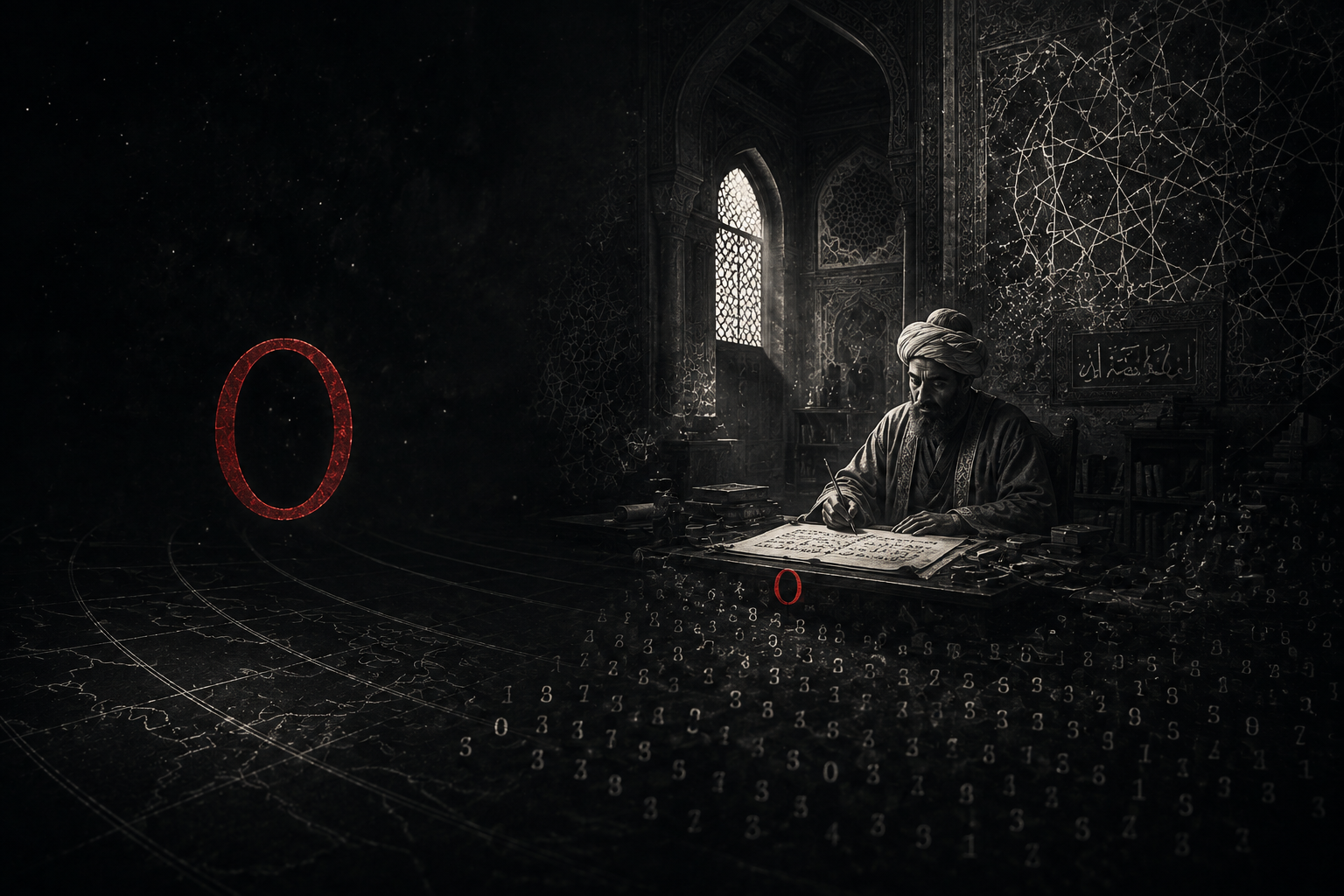
628 CE
Brahmagupta writes the Brāhmasphuṭasiddhānta— the first text to give zero its own arithmetic. Not a placeholder in a column. A number you could add, subtract, multiply.
9th century
al-Khwārizmī carries the system west into the Arab world. His name survives in English as the word algorithm.
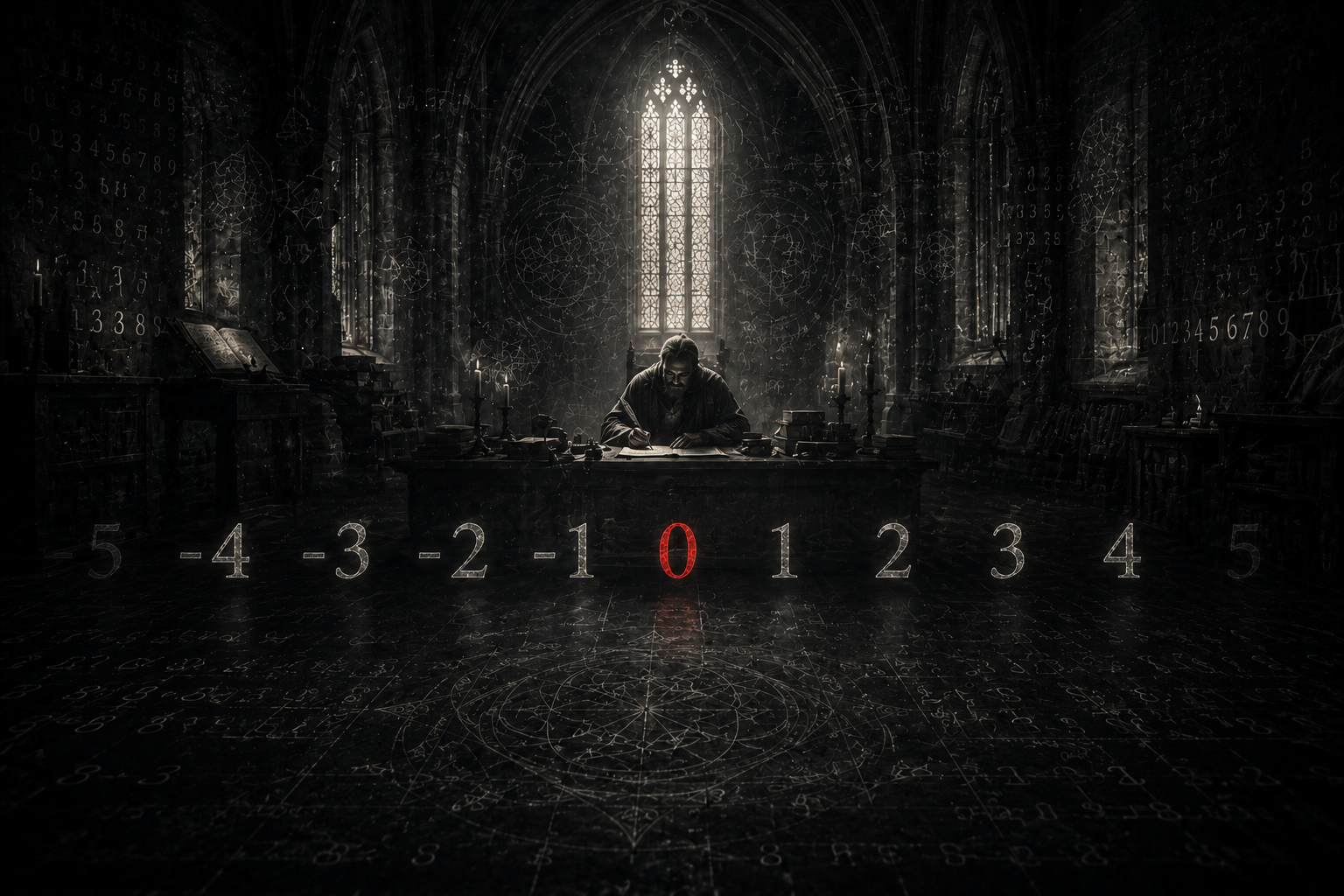
13th century
Europe adopts the numerals it still calls Hindu-Arabic — 0 1 2 3 4 5 6 7 8 9.

Now
Every line of binary ever written rests on it. Every calculation, every device, every image on this page.
03 | THE FOUNDING
I grew up being told our philosophy was history. Something to study in a classroom, recite at a festival, and leave there. Something to be proud of from a distance.
I didn't want to sell heritage as costume. Printing a deity on a hoodie is not reverence, it's decoration. I wanted to make clothing that could hold an idea the way the idea itself works — quiet from across the room, deep when you look closer.
So we started with the hardest word we had. We began from zero. Not as a slogan. As a method.
Paras Soni
Founder · Bharat, 2024

04| THE METHOD
We don't decorate garments with Indian symbols.
We let the symbols inform the garment.
Every collection begins from a zero point — a blank page and a clear intention.
The Sanskrit, the Devanagari, the fifth-century geometry: none of it is applied at the end to make a plain garment sell. It decides the cut. The weight of the cloth. Where the eye lands, and where it is left alone.
The result reads minimal from a distance and reveals itself up close — which is exactly how śūnya works. You are meant to find the second layer yourself.
05| THE MAKING
We publish the numbers, because the numbers are the argument.

240
GSM French terry, for the tees

350
GSM cotton fleece, for the heavyweights
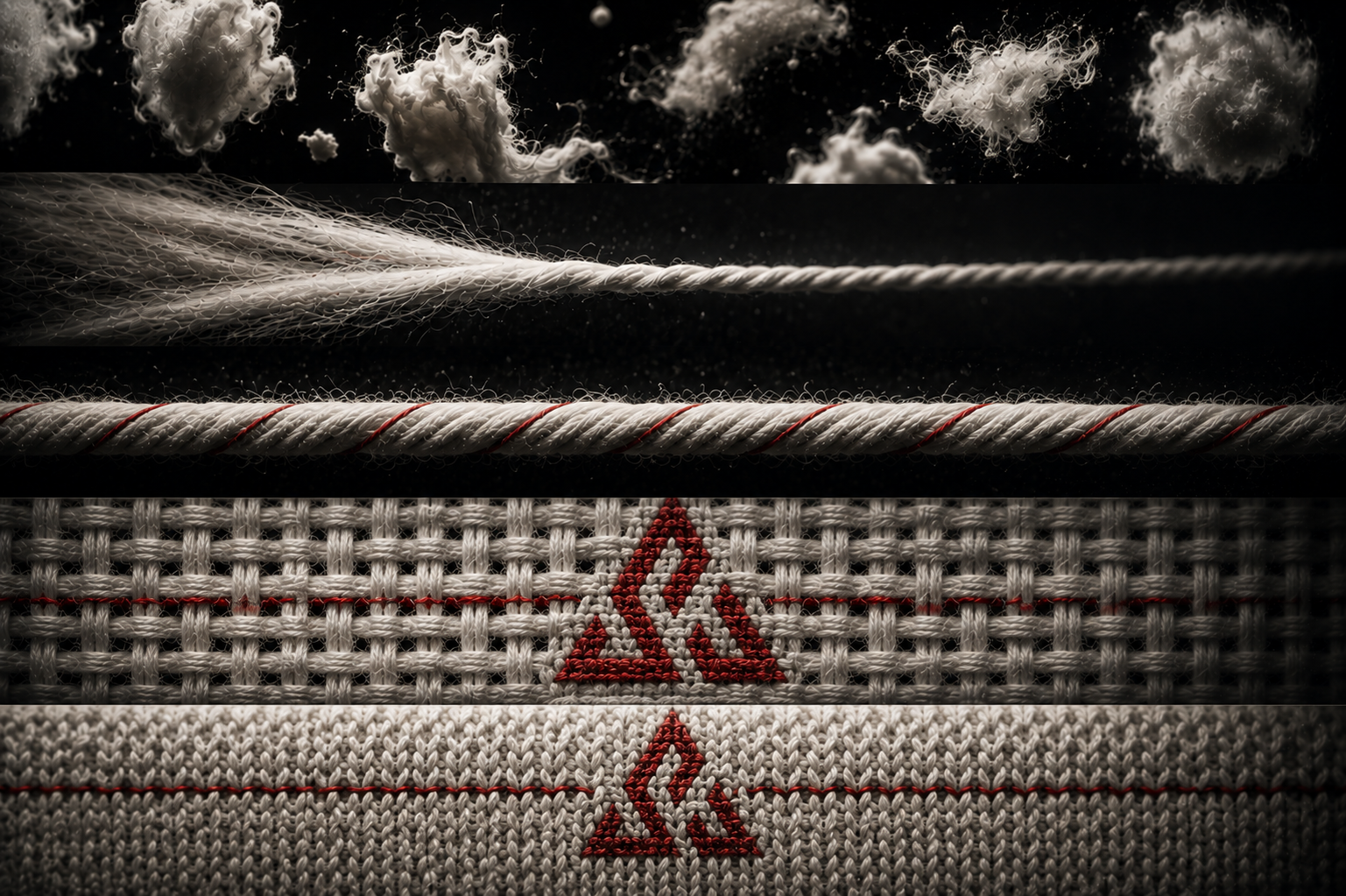
100% ORGANIC
Long-staple cotton, spun for durability

GERMAN
Threaded construction at every seam
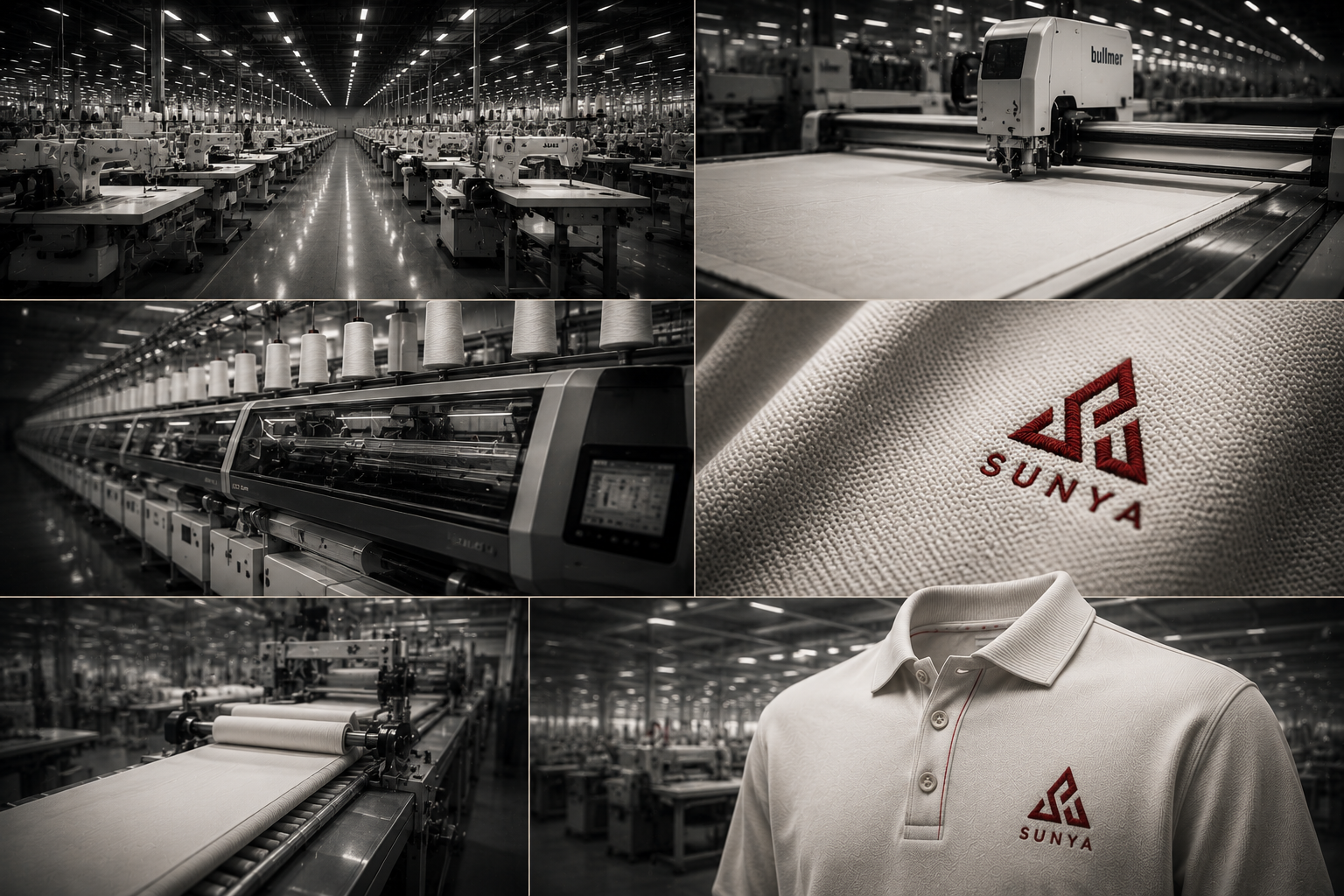
BHARAT
Made here, start to finish
Five words we have put on cloth, and what we owed them.
06| THE VOCABULARY
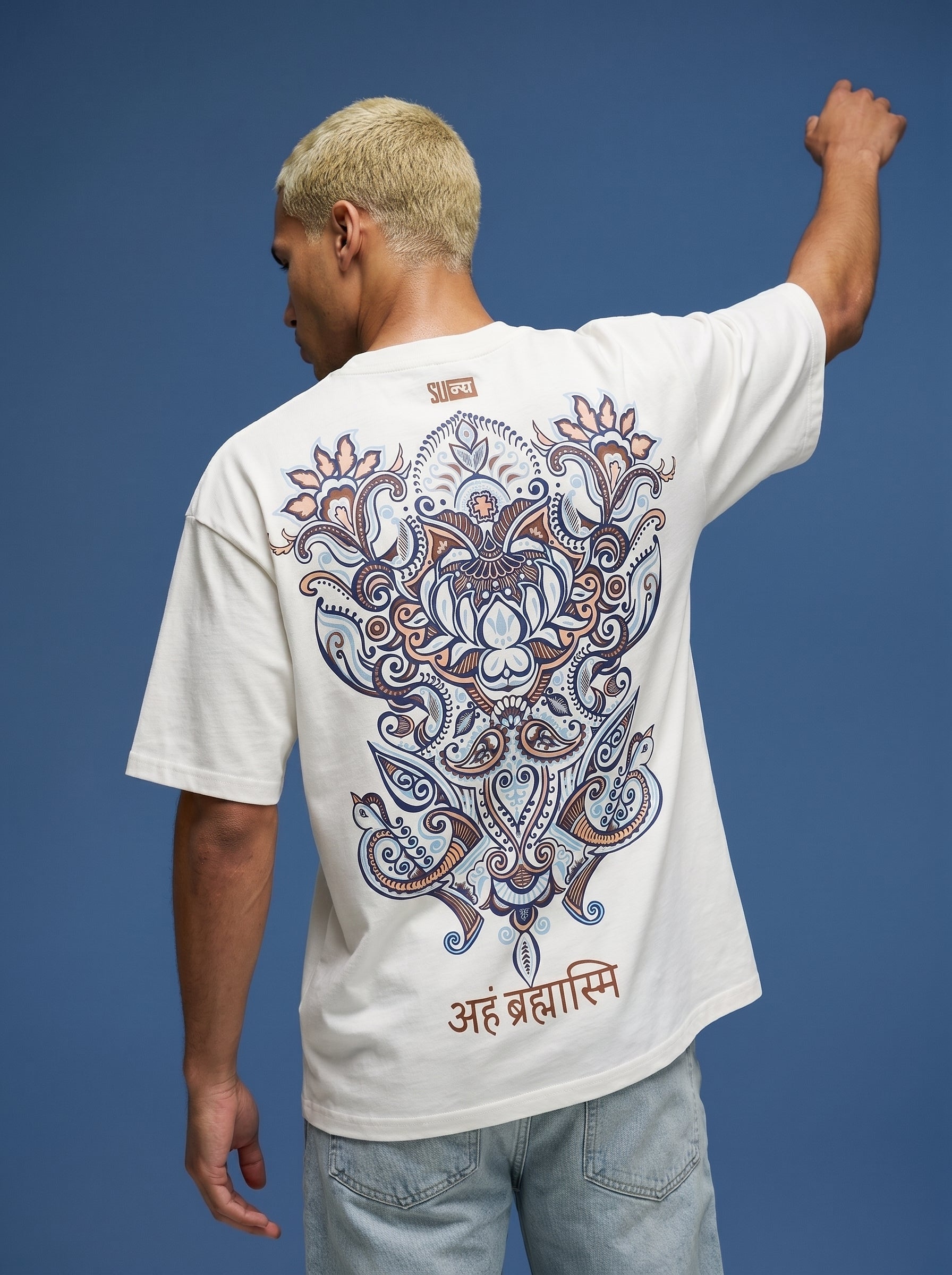
अहं ब्रह्मास्मि
“I am the universe.” One of the four mahāvākyas — the great statements of Vedanta.
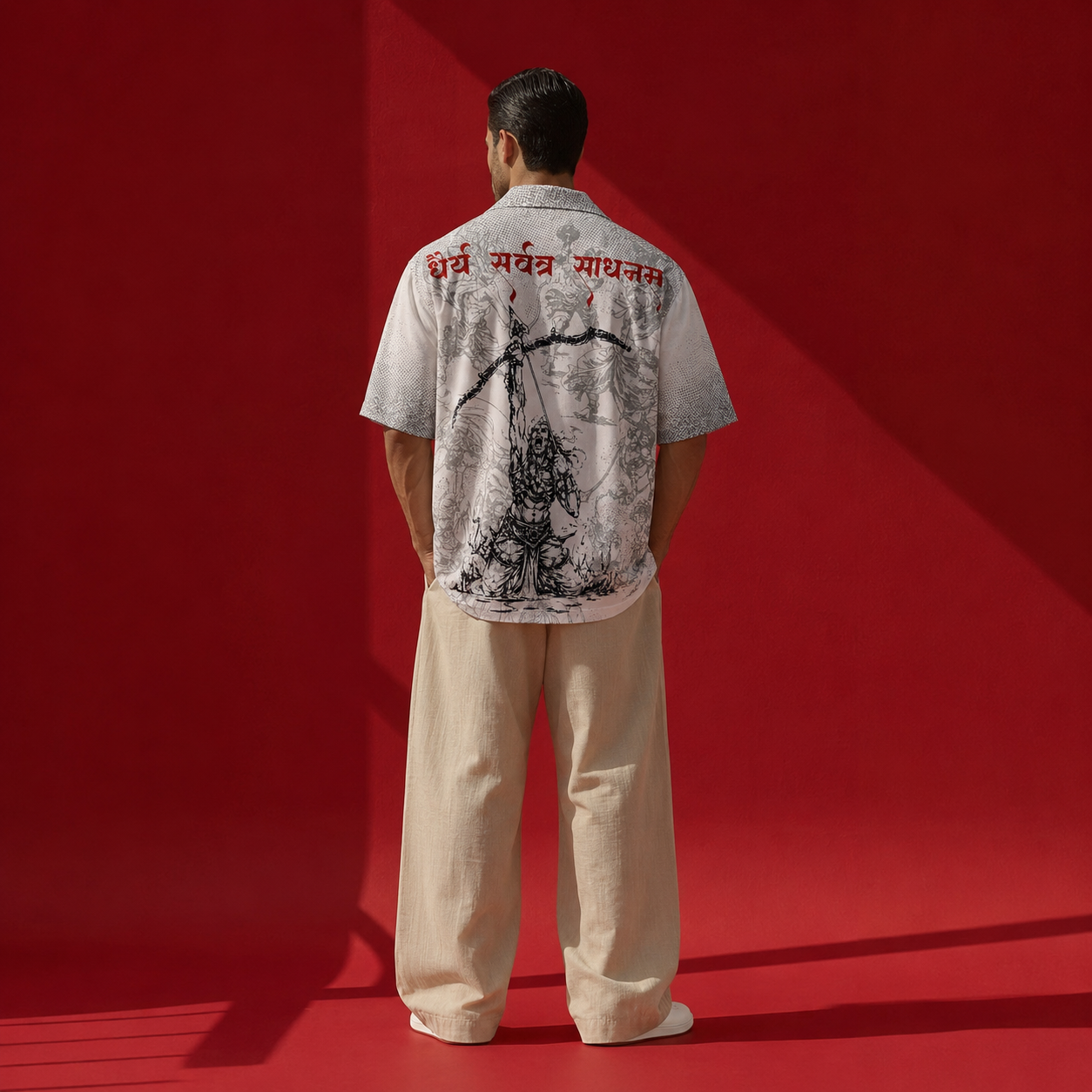
मोक्ष
Liberation. Release from the cycle. Tonal embroidery — quiet far away, intricate up close.


Distributed through ANI in August 2025 and carried by the publications below.


